
When a tooth is missing, everyday habits can begin to change. You may chew more on one side, avoid certain foods, or notice that your bite no longer feels quite the same. Over time, replacing the tooth may become less about appearance alone and more about getting back to comfortable, normal function.
Dental implants are one option for doing that. At Chaney Dental in Prairie Village, KS, Dr. Clark Chaney can examine the area, explain the available choices, and show you how implant treatment would unfold. Since the process happens in stages, understanding how those stages connect can make the entire experience easier to follow.
For some patients, treatment moves forward with only a few preliminary steps. For others, an extraction, bone graft, or extra healing time may come first. Either way, the plan depends on the condition of the tooth, the amount of bone available, and the type of restoration being considered.
What Is a Dental Implant?
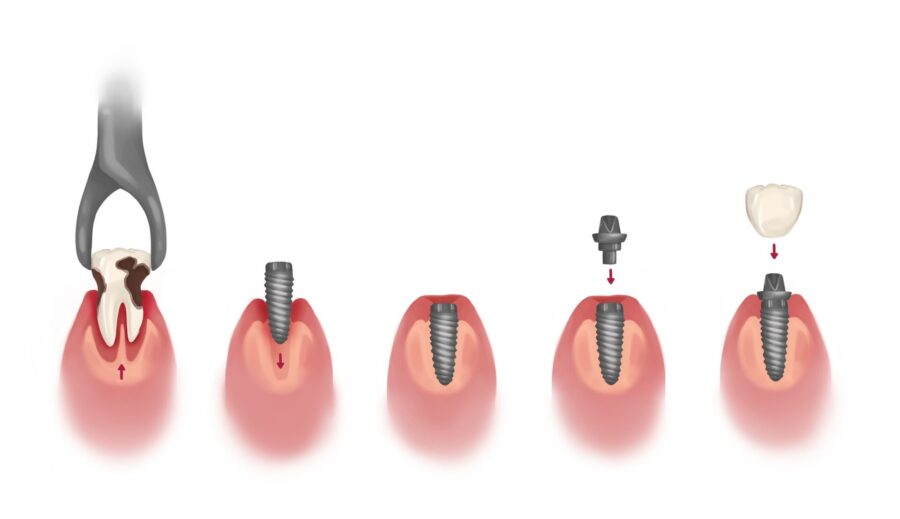
A dental implant replaces the root portion of a missing tooth. The implant itself is a small post placed in the jawbone, where it supports a crown, bridge, or another restoration. Once healing is complete, the finished tooth is designed to look natural and feel stable when you bite and chew.
Most implant restorations have three main parts. First, the implant sits below the gumline and provides support. Then an abutment connects the implant to the visible tooth above it.
For a single missing tooth, that visible portion is usually a custom crown. However, implants can also support bridges or larger restorations when several teeth are missing. The right design depends on how many teeth are involved, where they are located, and how the bite comes together.
Dental implants are not the only option, though. Depending on your needs, Dr. Chaney may also discuss a bridge, partial denture, or another solution. From there, you can compare the treatment time, upkeep, cost, and effect on the nearby teeth.
Your First Dental Implant Consultation
The first appointment focuses on gathering the right information. Dr. Chaney will examine the missing or damaged tooth, check the surrounding gums and teeth, and ask what you hope to improve. At the same time, he will look at how a replacement tooth would fit with your bite and the rest of your smile.
During that same visit, your medical history will also be reviewed. Certain health conditions, medications, smoking habits, or previous treatments can affect healing, so those details help shape the plan. They do not automatically rule out an implant, but they may change the order, timing, or preparation involved.
From there, imaging helps fill in the details that cannot be seen during the exam alone. X-rays can show the general condition of the bone, while three-dimensional imaging may be recommended when a closer view is needed. Together, those records help Dr. Chaney evaluate the available bone and the location of nearby nerves or sinus spaces.
Before the consultation ends, you can also discuss cost, timing, and the number of appointments involved. Because implant treatment often takes place over several visits, it helps to see the full sequence early. Then, as treatment moves forward, each appointment feels connected to a clear purpose.
Finding Out Whether You Are a Good Candidate
A healthy jawbone and stable gums give an implant a strong foundation. Still, those are only part of the picture. Dr. Chaney will also consider your bite, oral hygiene, medical history, and the condition of the teeth around the space.
If gum disease is active, it may need attention before implant placement. Likewise, untreated decay or infection elsewhere in the mouth may need to be addressed first. By taking care of those concerns early, the implant has a healthier setting for healing.
The amount of bone in the area is crucial. After a tooth is lost, the bone in that space can gradually shrink because it is no longer supporting a root. If the site does not have enough bone, a graft may be recommended.
A bone graft helps rebuild or strengthen the area. Afterward, the site may need time to heal before the implant is placed. In some cases, however, grafting can happen during the same visit as an extraction or implant procedure.
Removing a Damaged Tooth, When Necessary
Some patients begin with a tooth that is still in place but cannot be repaired predictably. In that case, the tooth may need to be removed before an implant can replace it. Dr. Chaney will explain why extraction is recommended and what the site may need afterward.
Sometimes the implant can be placed during the same appointment. However, that depends on the condition of the socket, the amount of healthy bone, and whether infection is present. If the area needs more time, the extraction is completed first, and implant placement follows after healing.
During that healing period, a temporary tooth may also be available, especially when the space shows in your smile. Depending on the case, the temporary may be removable or designed another way. Its main job is to help with appearance while protecting the area from too much pressure.
This stage can look quite different from one patient to another. Two people may be replacing similar teeth and still need different treatment sequences. For that reason, the exam and imaging are much more useful than comparing your timeline with someone else’s.
The Implant Placement Appointment
Once the site is ready, the implant can be placed in the jawbone. The area is numbed with local anesthesia, and Dr. Chaney can discuss additional comfort options when appropriate. Then the implant is positioned in the planned location and the gum tissue is closed around or over it.
During the procedure, you may notice pressure or movement, but the area should remain numb. The length of the visit depends on how many implants are being placed and whether another procedure is done at the same time. Before you leave, the Chaney Dental team will review the instructions for the first few days.
After the appointment, some swelling, tenderness, and minor bleeding can happen. The amount of soreness varies based on the location of the implant and the extent of treatment. In most cases, those symptoms begin to improve as the tissue settles.
For a short time, you may need to eat softer foods and avoid chewing directly on the site. In addition, the team will explain how to brush, rinse, use any prescribed medication, and adjust your activity. If pain becomes severe or swelling begins to increase, call the office for guidance.
Why the Healing Period Matters
After placement, the implant needs time to become stable within the jawbone. During a process called osseointegration, the surrounding bone heals closely around the implant surface. That connection is what allows the implant to support a replacement tooth later.
This phase often lasts several months. However, the exact timing depends on the location of the implant, the quality of the bone, your health, and whether grafting was involved. Dr. Chaney can give you a more specific estimate after reviewing your case.
Meanwhile, follow-up visits may be scheduled during this period. At those appointments, the team can check the implant, the gums, and any temporary restoration you are using. Those visits also help Dr. Chaney decide when the site is ready for the next stage.
Although there may not be much to see above the gumline, the bone is still healing below it. In other words, this quiet stretch is doing important work. Once the area is stable, the restorative phase can begin.
Placing the Abutment
After the implant has integrated with the jawbone, an abutment may be attached. This small connector sits between the implant and the final crown. Depending on how the implant was placed, it may already be accessible, or the gum may need to be opened briefly.
When a separate procedure is needed, the area is numbed first. Next, the abutment is attached, and the gum tissue is shaped around it. After that, the tissue may need a short period to settle before the final records are taken.
Once the site is ready, an impression or digital scan is usually completed. That record captures the position of the implant, the shape of the gums, the nearby teeth, and the bite. Using that information, the final restoration can be designed to fit the space accurately.
But, the crown needs to do more than close the gap. It should meet the opposing tooth correctly, fit beside the neighboring teeth, and blend with the rest of your smile. Those details affect both comfort and appearance, so they play an important role in the final result.
Receiving the Final Restoration
When the crown is ready, it is attached to the implant through the abutment. Dr. Chaney will check the color, shape, contacts, and bite before the appointment is complete. If anything feels high or uneven, small adjustments can be made.
At first, you may notice the tooth simply because it is new. Then, as you begin chewing and speaking normally, it should start to feel more familiar. For many patients, the adjustment period is fairly simple and soon the implant feels like a natural tooth.
Even after the crown is in place, daily care still matters. The crown itself cannot develop a cavity, but plaque and inflammation can affect the gums and supporting bone around the implant. Because of that, brushing and cleaning around the area remain important.
Depending on the shape and location of the tooth, Dr. Chaney may recommend floss, an interdental brush, a water flosser, or another cleaning aid. The best option is one that reaches the area well and fits into your routine. During follow-up visits, the team can check the tissues and make suggestions when needed.
How Long Does the Full Process Take?
There is no single implant timeline that works for everyone. A straightforward case may move from consultation to final crown within several months. However, treatment can take longer when an extraction, graft, gum therapy, or added healing time is needed.
Healing also varies from person to person. Medical conditions, smoking, certain medications, and oral hygiene can all affect the pace. Because of that, the schedule should follow how the implant site is responding rather than a date chosen too early.
During your consultation, Dr. Chaney can outline the likely stages based on the exam and imaging. Then, as the area heals, the timeline can be updated. This keeps the process tied to what is happening clinically and helps each stage happen at the right time.
If you have a wedding, vacation, or another important event coming up, mention it at the beginning. The team may be able to plan a temporary tooth or certain visits around that date. Even so, the health and stability of the implant site will guide the final schedule.
Questions Worth Asking at Your Consultation
A consultation is most useful when you leave knowing what applies to your case. Ask whether there appears to be enough bone, whether the damaged tooth needs to be removed, and whether grafting is likely. You may also want to ask what kind of temporary tooth could be used while the area heals.
Next, ask how many appointments are expected and which stages will take place at Chaney Dental. It is also helpful to ask what the estimated fee includes. Implant care may involve imaging, surgery, an abutment, a crown, and follow-up visits.
From there, Dr. Chaney can also explain the alternatives. A bridge or removable option may still be worth considering, even when an implant appears to be the leading choice. Comparing the timeline, maintenance, cost, and effect on nearby teeth can make the decision easier.
Finally, bring up the practical questions on your mind. You may want to ask about discomfort, recovery, time away from work, or how the temporary tooth will look. Those details can affect both the schedule and the way you prepare.
Schedule a Dental Implant Consultation at Chaney Dental in Prairie Village
Dental implant treatment follows a clear sequence, even though the details vary from patient to patient. The process begins with an exam and treatment plan, followed by any preparation the site may need. Then the implant is placed, allowed to heal, and completed with a custom restoration.
Dr. Clark Chaney can evaluate your missing or damaged tooth and explain which options fit your needs. During the consultation, you can review the expected timeline, any preliminary treatment, and the type of restoration being considered. By the end of the visit, you should have a much clearer picture of what the process may involve.
Contact Chaney Dental in Prairie Village, KS, to schedule a dental implant consultation with Dr. Clark Chaney. Bring your questions, your health information, and any details about what you would like to improve. From there, you can move forward with a plan shaped around your mouth, your schedule, and the result you hope to achieve!
Image from Authority Dental under CC 2.0